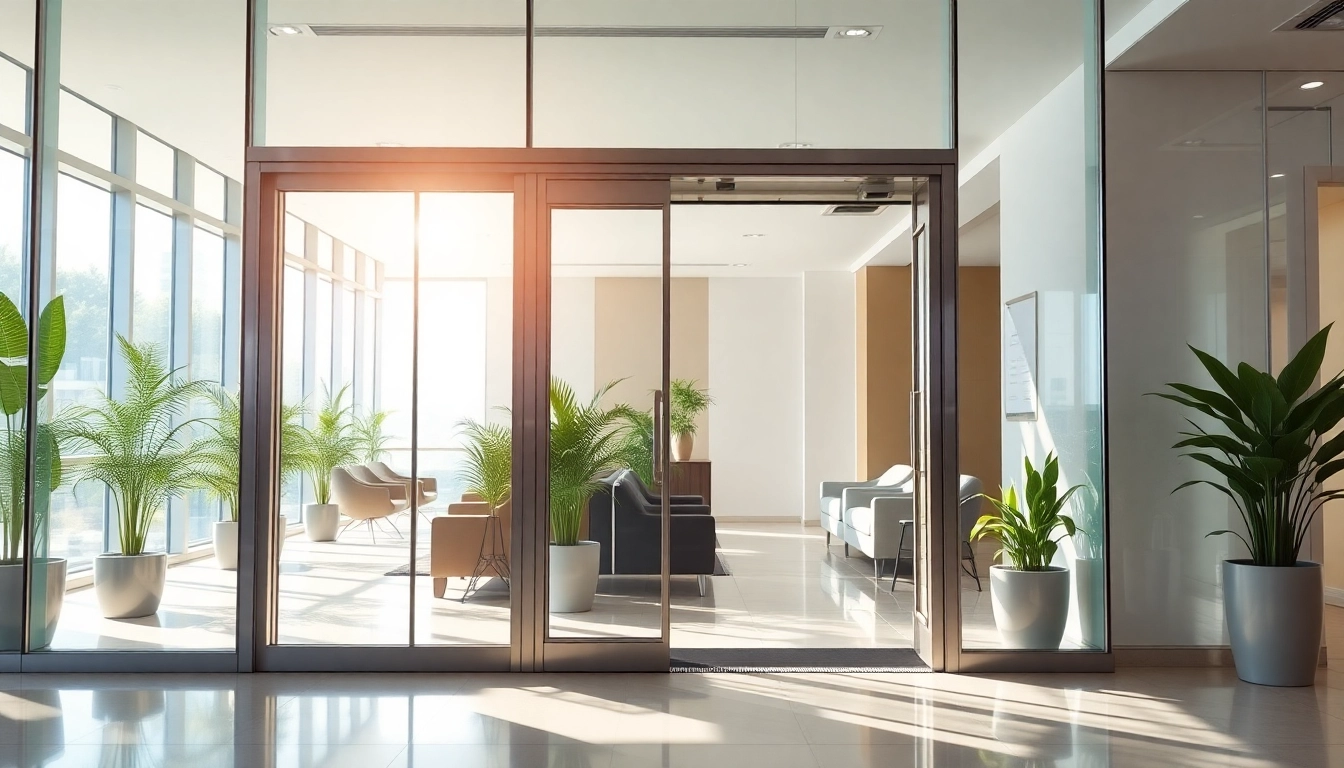
Understanding Commercial Automatic Doors
What are Commercial Automatic Doors?
Commercial automatic doors are modern entry systems that open and close automatically, enhancing accessibility and convenience in various business environments. Designed primarily for high-traffic areas, these doors use sensors to detect approaching individuals, allowing for hands-free entry and exit. This not only improves customer flow but also boosts operational efficiency, making Commercial Automatic Doors a popular choice among retailers, hospitals, airports, and corporate offices.
Types of Commercial Automatic Doors
There are several types of commercial automatic doors, each designed to serve specific functions and aesthetics. The most common types include:
- Sliding Automatic Doors: These doors slide open parallel to the wall, ideal for wide entries where space is limited.
- Revolving Doors: Featuring rotating doors, this type ensures efficient entry while maintaining a stable indoor climate.
- Folding Automatic Doors: Comprised of multiple panels, these doors fold open, allowing for a larger opening while conserving space.
- Bi-Parting Automatic Doors: These doors divide in the center and slide open in opposite directions, suitable for numerous commercial applications.
- Swinging Automatic Doors: Similar to traditional doors, they swing open automatically, offering a classic look with modern functionality.
Benefits of Commercial Automatic Doors
Investing in commercial automatic doors provides numerous advantages, including:
- Accessibility: Automatic doors cater to individuals with disabilities, ensuring that everyone can easily enter a building.
- Energy Efficiency: Many automatic doors are designed with insulation and airtight seals, reducing energy consumption by minimizing external airflow.
- Enhanced Security: These doors can integrate with security systems, providing controlled access and monitoring for sensitive areas.
- Improved Aesthetics: With sleek designs and functionality, automatic doors can elevate the overall appearance of a business.
- Reduced Labor Costs: By eliminating the need for staff to open and close doors manually, businesses can streamline operations and reduce labor expenses.
Choosing the Right Commercial Automatic Doors
Factors to Consider Before Installation
When selecting commercial automatic doors, several factors should be considered to ensure the chosen system aligns with business needs:
- Traffic Volume: Analyze foot traffic patterns to determine the suitable door type and automation needed.
- Space Availability: Consider the physical space available for installation and maintenance.
- Building Regulations: Check local codes and regulations to ensure compliance with accessibility standards.
- Security Requirements: Assess the security features necessary for your specific location.
- Cost vs. Value: Evaluate the initial investment against long-term benefits and savings.
Material Variations and Their Advantages
Commercial automatic doors come in various materials, each presenting distinct advantages:
- Aluminum: Lightweight and resistant to corrosion, aluminum doors provide a modern look and durability.
- Glass: Offering transparency, glass doors create a welcoming atmosphere while enhancing aesthetics.
- Steel: Known for its strength and security, steel doors are particularly suited for high-risk areas.
- Wood: While less common, wooden doors can provide a rustic appeal and blend seamlessly into traditional environments, although they generally require more maintenance.
Energy Efficiency in Commercial Automatic Doors
Energy efficiency is a crucial consideration for businesses aiming to reduce operating costs. Features enhancing energy efficiency in automatic doors include:
- Thermal Breaks: Insulated materials with thermal breaks prevent heat transfer, helping maintain consistent indoor temperatures.
- Smart Sensors: Advanced sensor technology minimizes energy waste by ensuring doors only open when approached.
- Weather Stripping: Proper sealing around doors helps avoid drafts, further optimizing heating and cooling expenses.
- Energy Star Ratings: Selecting doors with Energy Star certification ensures energy-efficient performance.
Installation Process for Commercial Automatic Doors
Preparation Before Starting Installation
Before installing commercial automatic doors, thorough preparation is essential for a successful outcome. Key steps include:
- Site Assessment: Analyze the installation site for any structural considerations or adjustments needed.
- Permits and Approvals: Ensure all necessary permits are secured before proceeding with installation.
- Choosing the Right Installation Partner: Selecting an experienced installation service can significantly influence the installation process and long-term performance.
- Access to Tools: Prepare the required tools and equipment, which may include drills, brackets, and electrical wiring components.
Step-by-Step Installation Guide
The installation of commercial automatic doors typically involves the following steps:
- Remove Existing Doors: If applicable, start by removing any current doors or fixtures.
- Prepare the Frame: Ensure the door frame is level and secure, making any necessary adjustments before proceeding.
- Install the Track: For sliding doors, mount the track securely above the door opening according to manufacturer specifications.
- Hang the Door: Attach the door panels to the track, ensuring they glide smoothly.
- Connect the Automation System: Install the sensor systems and electrical components as outlined in the installation manual.
- Test Functionality: Conduct thorough testing of the door’s automated features and make necessary adjustments.
- Finishing Touches: Complete any necessary sealing, trims, or aesthetics to finalize the installation.
Post-Installation Testing and Adjustments
Once installed, rigorous testing is crucial to confirm functionality and safety. Key areas to focus on include:
- Sensor Accuracy: Ensure sensors effectively detect users and trigger door operation without delay.
- Safety Features: Validate that safety mechanisms, such as obstacle detection, operate correctly to prevent accidents.
- Motion Sensitivity: Adjust settings for optimal response to user proximity.
- Durability Checks: Test the durability of hinges and tracks under typical traffic conditions.
Maintenance of Commercial Automatic Doors
Regular Maintenance Tips
For optimal performance, regular maintenance of commercial automatic doors is crucial. Recommended maintenance practices include:
- Cleaning: Keep all surfaces free from dirt and debris to ensure sensors function correctly.
- Visual Inspections: Regularly check for signs of wear or damage that may require immediate attention.
- Lubrication: Apply lubricant to moving components to prevent corrosion and ensure smooth operation.
- Sensor Calibration: Periodically recalibrate sensors to maintain accuracy in detection.
Common Issues and Troubleshooting
Despite their functionality, commercial automatic doors may experience issues. Common challenges include:
- Door Does Not Open: This can occur due to sensor malfunction or obstruction. Clearing any debris and checking sensors can often resolve the issue.
- Constant Opening/Closing: This may indicate misalignment or calibration issues. Adjusting settings or realigning sensors can help.
- Noisy Operation: Grinding or squeaking noises typically signal the need for lubrication or replacement parts.
- Improper Door Closure: This can result from damaged seals or hardware malfunctions; inspecting and addressing these issues is essential.
When to Call a Professional
If maintenance and troubleshooting do not resolve issues, it’s time to consult a professional. Situations warranting expert help include:
- Complex Malfunctions: If the automatic system shows unusual behavior that is outside the scope of basic troubleshooting.
- Electrical Problems: Issues related to wiring or main controls should be handled by electrical specialists.
- Replacement Needs: If components are beyond repair, a professional can recommend appropriate replacements.
Future Trends in Commercial Automatic Doors
Advancements in Automation Technology
The future of commercial automatic doors aligns closely with advancements in automation technology, which promise enhanced efficiency and safety features. Key trends include:
- AI Integration: Artificial intelligence will enable doors to learn and predict user patterns, allowing for faster response times and improved user experiences.
- Sensors with Enhanced Capabilities: Future sensors may be equipped with sophisticated features to mitigate false alarms and detect environmental conditions.
- Remote Monitoring: Advanced systems may allow for remote diagnostics, enabling proactive maintenance and minimizing downtime.
Sustainable Materials for Commercial Automatic Doors
As sustainability becomes increasingly critical, manufacturers are focusing on using eco-friendly materials in automatic door construction. Trends include:
- Recycled Materials: Utilizing recycled materials can significantly reduce the carbon footprint associated with production.
- Biodegradable Components: Companies are experimenting with biodegradable elements that minimize waste at the end of the product’s lifecycle.
- Energy-Efficient Manufacturing: Manufacturers are adopting energy-efficient processes, enhancing the overall sustainability of automatic doors.
Impact of Smart Technology on Commercial Spaces
The integration of smart technology is transforming commercial spaces, with automatic doors at the forefront. Innovations include:
- Smart Unlocking Systems: These systems allow users to access buildings through smartphones, adding convenience and security.
- Data Analytics: Automatic doors equipped with sensors can provide data on foot traffic patterns, assisting businesses in operational decision-making.
- IoT Integration: Internet of Things (IoT) compatibility enables doors to connect with other smart devices for enhanced functionality and security.
Frequently Asked Questions
What are the key benefits of installing automatic doors?
Automatic doors enhance accessibility, improve energy efficiency, enhance security, and provide a modern aesthetic to businesses.
How much do commercial automatic doors cost?
The cost varies based on the type, materials, and installation complexity, typically ranging from a few thousand to tens of thousands of dollars.
How do automatic doors improve energy efficiency?
They minimize the duration for which doors are open, reducing heating and cooling loss and often have thermal insulation features.
Are automatic doors suitable for all commercial buildings?
Yes, they can be customized to fit various types of commercial buildings, including retail, office, and healthcare facilities.
What maintenance is required for automatic doors?
Regular cleaning, inspections, lubrications, and sensor calibrations are crucial for optimal performance and longevity.